Video Streaming using Socket Programming and OpenCV

What is Socket?
Sockets allow communication between two different processes on the same or different machines. To be more precise, it's a way to talk to other computers using standard Unix file descriptors. In Unix, every I/O action is done by writing or reading a file descriptor. A file descriptor is just an integer associated with an open file and it can be a network connection, a text file, a terminal, or something else.
To a programmer, a socket looks and behaves much like a low-level file descriptor. This is because commands such as read() and write() work with sockets in the same way they do with files and pipes.
What is Network Socket?
- A software structure within a network mode.
- Serves as an endpoint to send and receive data.
- Its properties are defined by network API.
- Exists only during the process of application.
- Externally identified by its socket address.
What are Socket Addresses?
- A combination of protocol type, IP address and Port number for data communication.
- A remote process establishes a socket in its protocol stack.
- The remote process then uses a networking API to connect to the application.
- It presents its own socket address for use.
Implementation of Socket.
In standard Internet Protocols like TCP and UDP: Socket Address is a combination of = (IP address, Port Number), Much like Telephone and extension.
Several Types of Internet Sockets:-
Datagram Sockets:-
- Connectionless Sockets User Datagram Protocol (UDP).
- Each packet sent or received is individually addressed.
- Order and reliability are not guaranteed.
Stream Sockets:-
- Connection-Oriented Sockets Transmission Control Protocol (TCP).
- Packets are sequenced with a unique flow of error-free data.
- Order and reliability are guaranteed.
Raw Sockets:-
- Allow direct sending and receiving of IP packets.
- Without any protocol-specific transport layer formatting
- When transmitting packets automatic addition of a header is optional
- Mostly used in security-related application
- Raw sockets are typically available in network equipment
Video Streaming Application:-
Python Server Module:
- Socket Creation: clientsocket= socket.socket(socket.AF_INET, socket.SOCK_STREAM)
- Socket Connect: clientsocket.connect((host_ip, port))
- Socket Send: clientsocket.sendall()
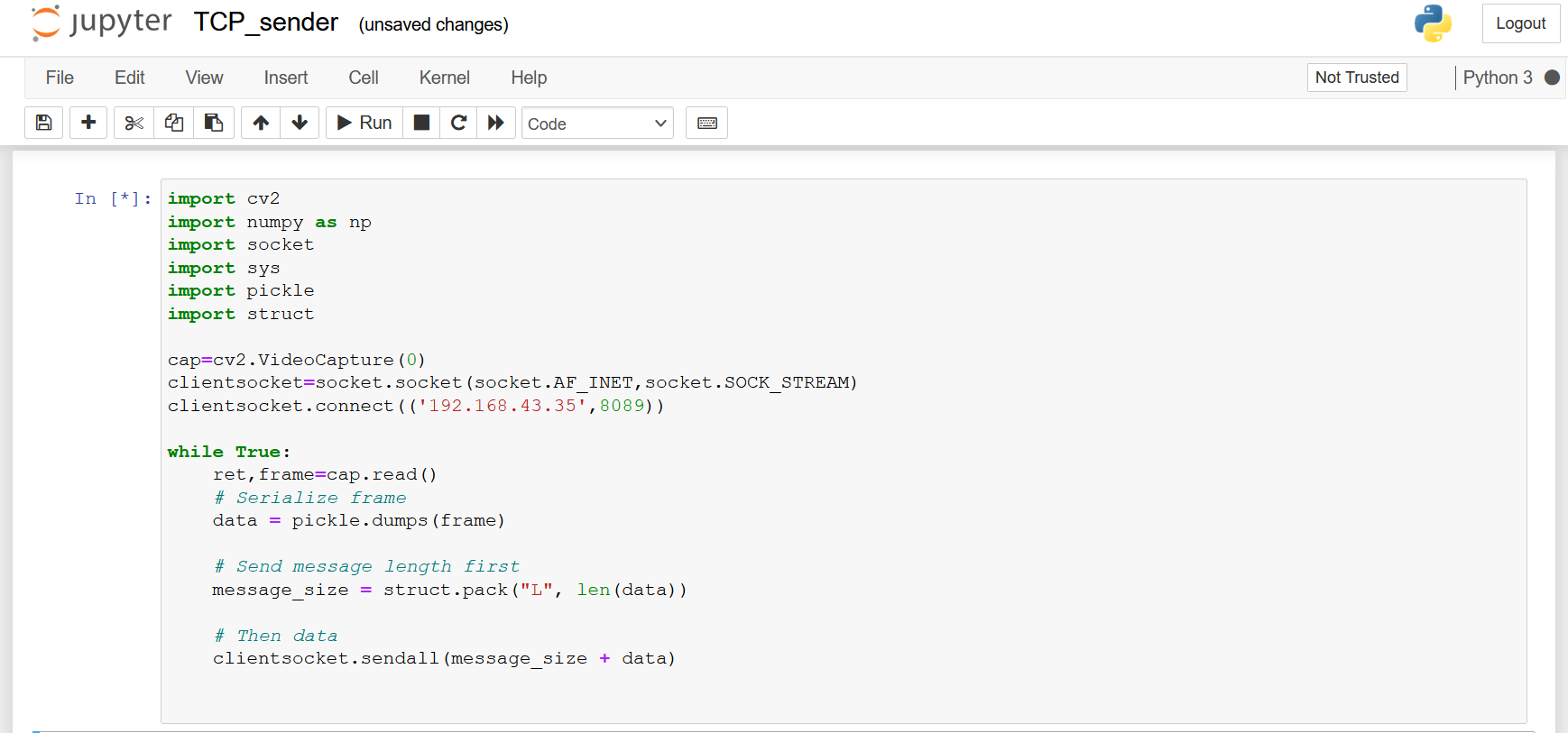
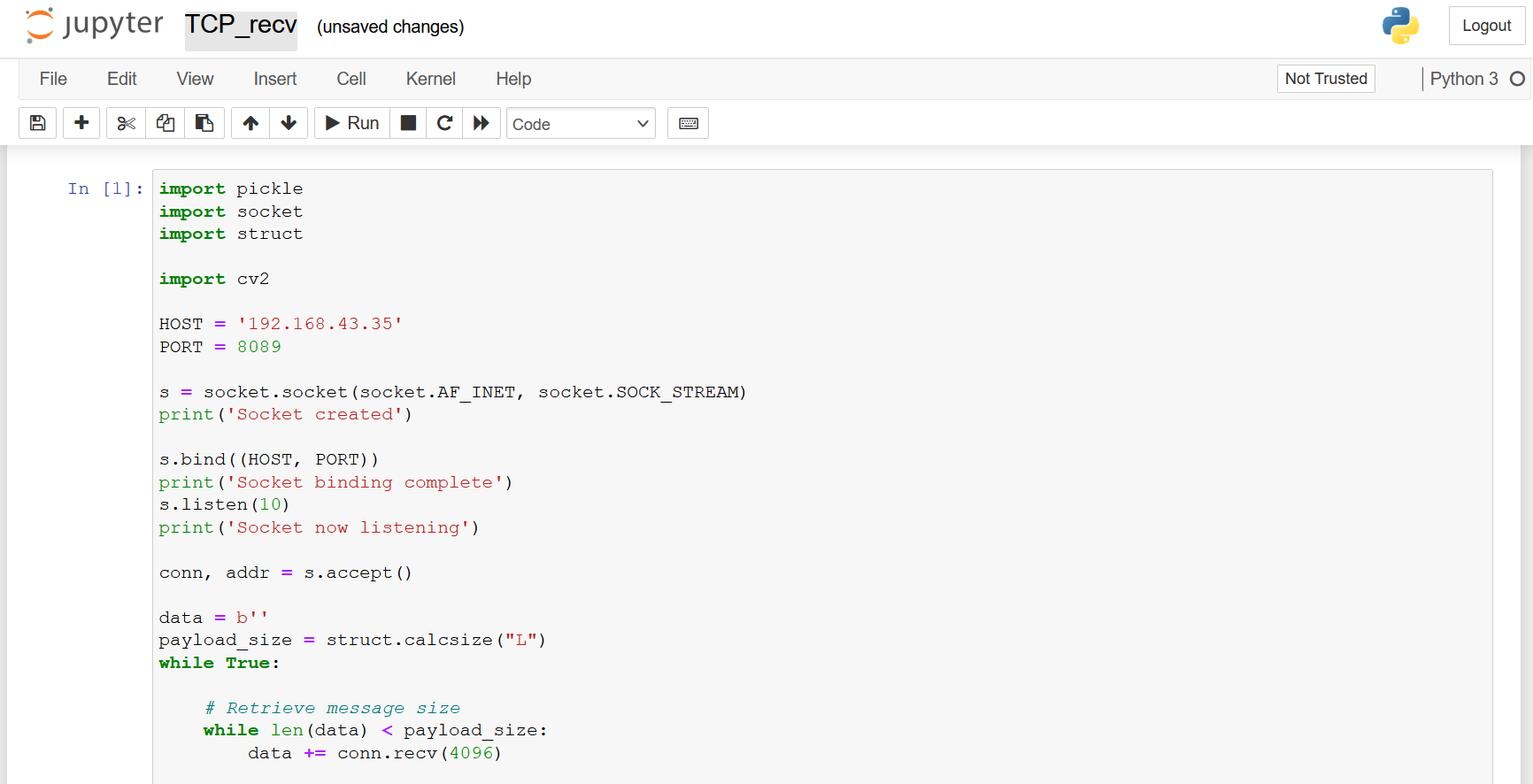
Python Client Module:
- Socket Creation: s= socket.socket(socket.AF_INET, socket.SOCK_STREAM)
- Socket Bind: s.bind((host_ip, port))
- Socket Accept: conn, addr = s.accept()
- Socket Listen: s.listen(10)
- Socket Receive: data += conn.recv(4096)
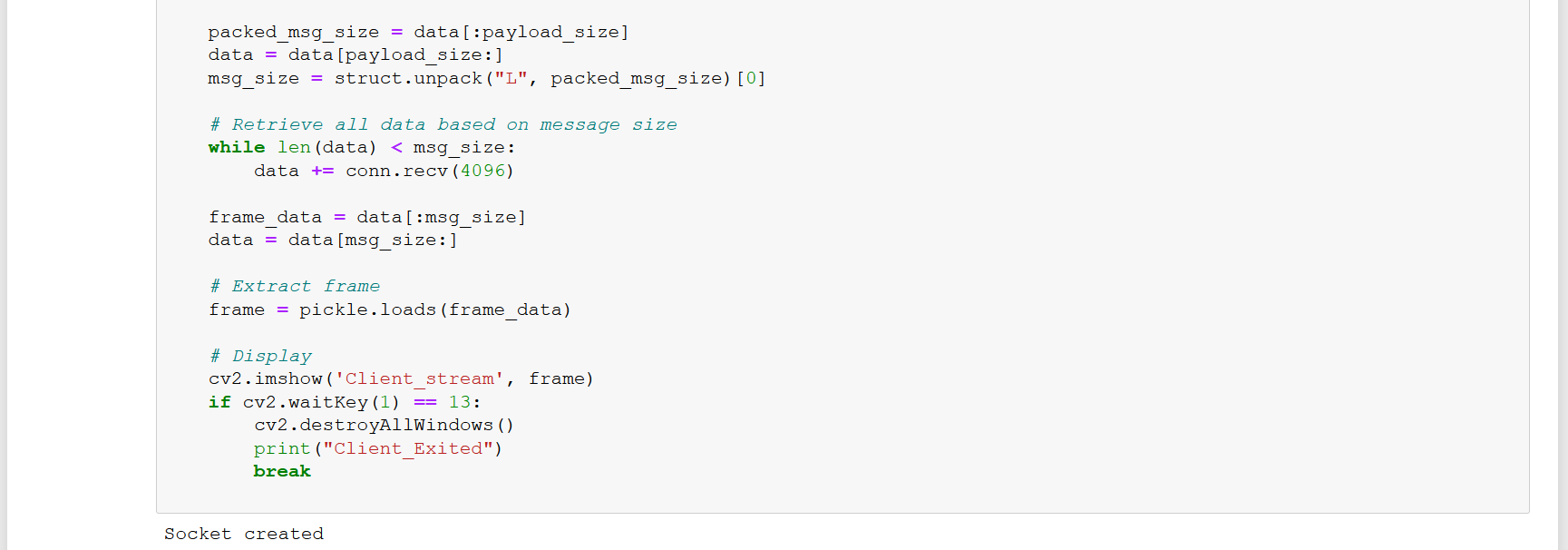
Video Data Transmission:-
At server side:-
- With Open CV get video frames of the webcam.
- With “pickle” serialize frame to byte data.
- Pack each frame data using the struct module.
- Send data to client and display frame.
At client Side:-
- Receive packets and append them to data.
- Unpack the data using the struct module.
- Load the frame using the pickle.
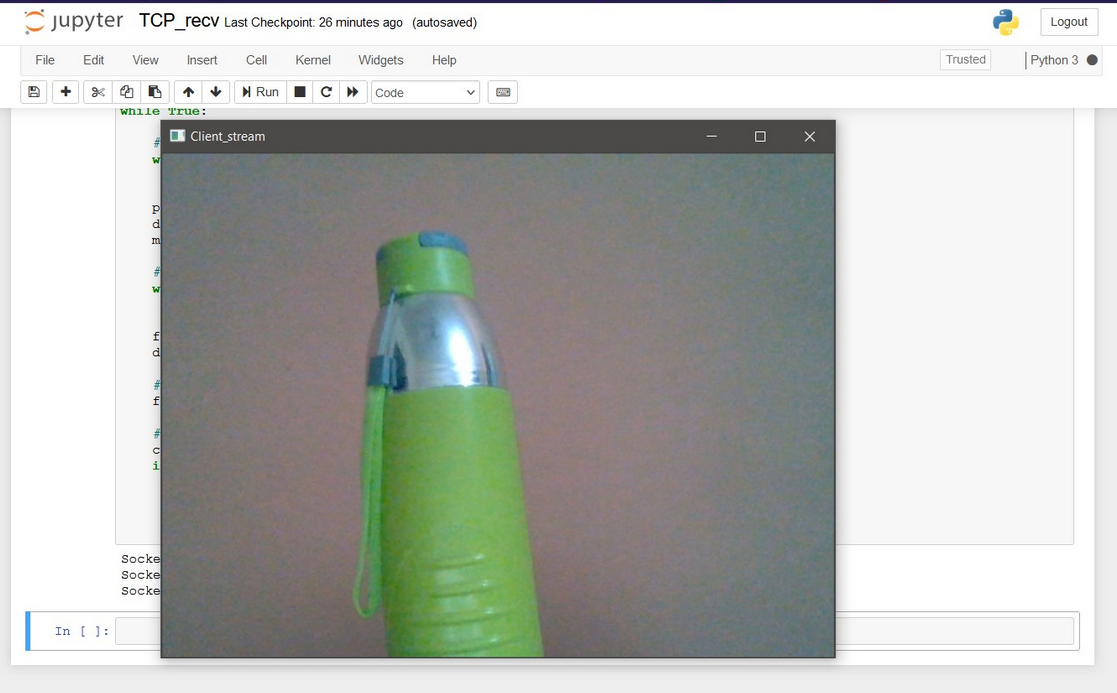
- Display the frame at the client side.
Output:-
 I would like to thanks Mr Vimal Daga sir for providing us with such knowledge to complete this task.


